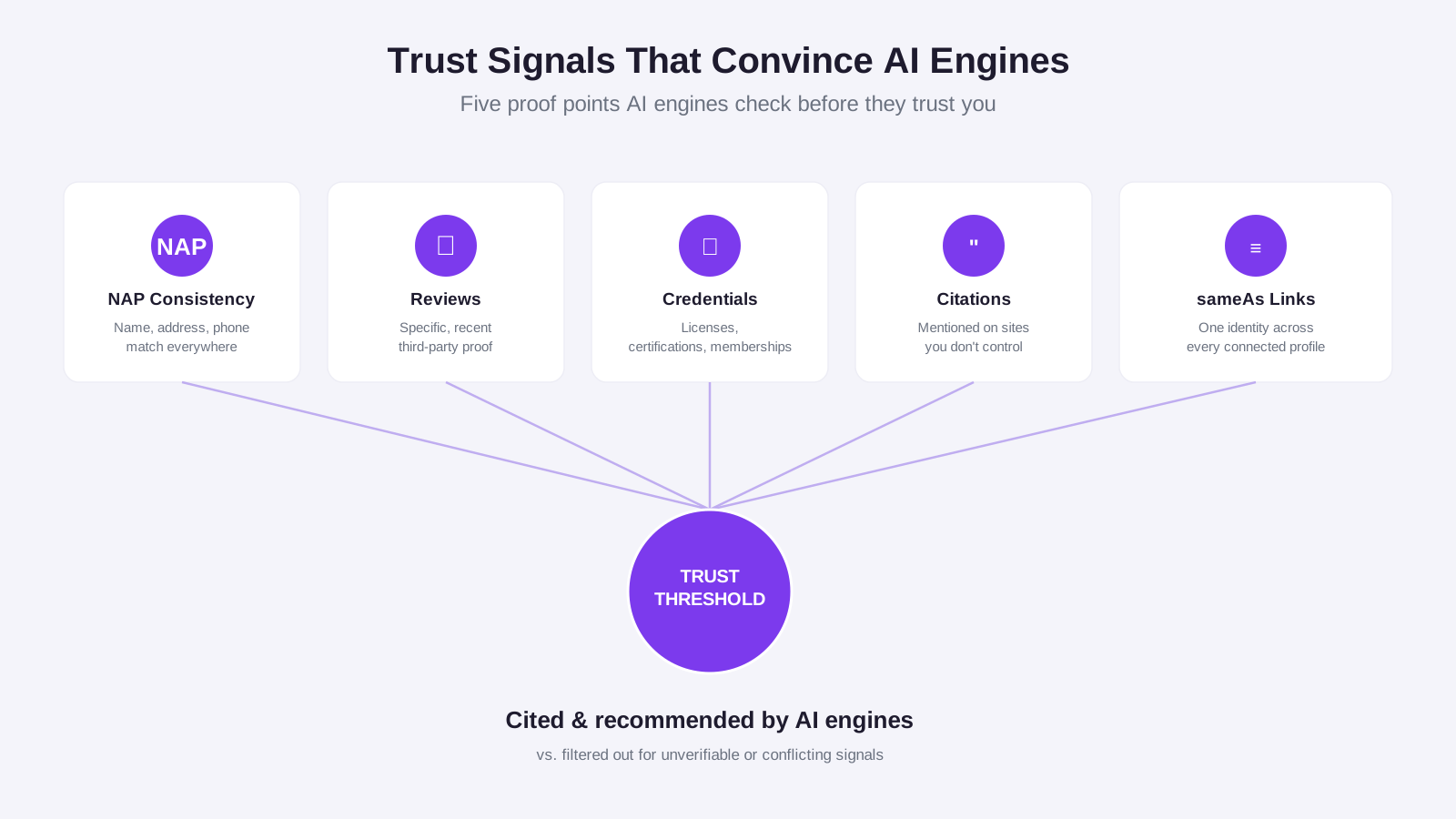
Trust signals are the proof points — consistent business details, third-party reviews, verifiable credentials, citations, and connected profiles — that let AI engines confirm a business is real and safe to recommend. Without them, even well-written content struggles to get cited by ChatGPT, Perplexity, or Google's AI Overviews. This guide covers the five trust signals that matter most for Hong Kong businesses in 2026, and how to build each one.
Why Trust Signals Matter More Than Ever
Search engines used to trust a website based on backlinks and keywords. AI engines go further. Before an AI model cites or recommends a business, it tries to confirm the business actually exists, operates where it says it does, and is regarded well by others. That confirmation doesn't come from your own website copy — it comes from external, independently verifiable signals.
This is the missing piece for most HK businesses. You can have perfect on-page SEO and still be invisible to AI answers if nothing outside your site backs up who you are.
1. NAP Consistency: The Foundation AI Engines Check First
NAP stands for Name, Address, Phone number. AI engines and search crawlers cross-reference your NAP across every place it appears — your website, Google Business Profile, industry directories, social profiles, and press mentions. When the details match everywhere, it confirms you're a real, stable business. When they don't — an old address on one directory, a different phone number on another — it creates doubt, and doubt gets your business filtered out of AI answers rather than included.
- Your business name, address, and phone number are identical (down to formatting) across your website, Google Business Profile, Facebook, LinkedIn, and any HK business directories you're listed on.
- Old addresses or outdated numbers are updated or removed.
- Your structured data (ProfessionalService schema) matches your live NAP exactly.
2. Reviews and Testimonials: Third-Party Proof
A business talking about itself is a claim. A customer talking about a business is evidence. Reviews on Google, industry-specific platforms, and even testimonials embedded with Review schema give AI engines independent confirmation that real people had real experiences with you.
Volume matters, but recency and detail matter more. A handful of specific, recent reviews carry more weight with both algorithms and human readers than a large batch of generic five-star ratings from years ago.
- A simple, repeatable ask (email, WhatsApp, or in-person) after each project or event.
- Reviews with specifics — a service used, a result achieved — rather than one-line praise.
- Review or AggregateRating schema on service pages, where genuine reviews exist.
3. Verifiable Credentials: Licenses, Certifications, Memberships
Credentials answer a specific question AI engines are trained to ask: is this entity qualified to do what it claims? Professional licenses, industry certifications, chamber of commerce memberships, and platform partnerships (Google Partner, Meta Business Partner, etc.) are all verifiable — meaning they can be checked against a source outside your own website.
- List relevant licenses, certifications, and memberships on your About page.
- Link to the verifying body's page or directory listing where possible.
- Mark up credentials with hasCredential in your Person or Organization schema.
4. Third-Party Citations: Being Mentioned Where You Didn't Write It
A citation is any mention of your business on a site you don't control — a directory listing, a news article, an industry roundup, a partner's client list. Unlike a backlink built for SEO, a citation's value comes from the fact that someone else chose to reference you without being asked.
For HK businesses, this often starts with structured directories: chamber of commerce listings, startup community pages, InvestHK partner directories, and relevant industry publications.
- A short list of 15–20 realistic HK directories and communities relevant to your industry.
- Consistent NAP and business description across every listing (see Signal 1).
- A simple outreach note for smaller directories that require manual submission.
5. sameAs Links: Connecting Your Identity Across the Web
sameAs is the schema property that tells AI engines "this LinkedIn profile, this Facebook page, and this website all represent the same entity." It's a direct, machine-readable way to consolidate all your trust signals into one confirmed identity, rather than leaving AI engines to guess whether scattered profiles belong to the same business.
- sameAs array on your Organization and Person schema pointing to LinkedIn, Facebook, Instagram, and any verified directory listings.
- Confirm every linked profile is active and consistent with your NAP and description.
How This Fits Your Four-Pillar Strategy
Trust doesn't work in isolation. Event marketing is one of the most effective ways to generate genuine, recent trust signals — a hosted event produces reviews, photos, press mentions, and partner citations all at once. And once your Trust pillar is solid, it feeds directly into the same E-E-A-T evaluation AI engines use for the Authority pillar — the two reinforce each other.
If you're not sure where your business currently stands, start with our 5-minute ChatGPT visibility check to see whether AI engines can find and trust you today.
Frequently Asked Questions
Trust signals are external, verifiable proof points — like consistent NAP details, reviews, credentials, citations, and connected profiles — that confirm a business is real and legitimate to both search engines and AI engines.